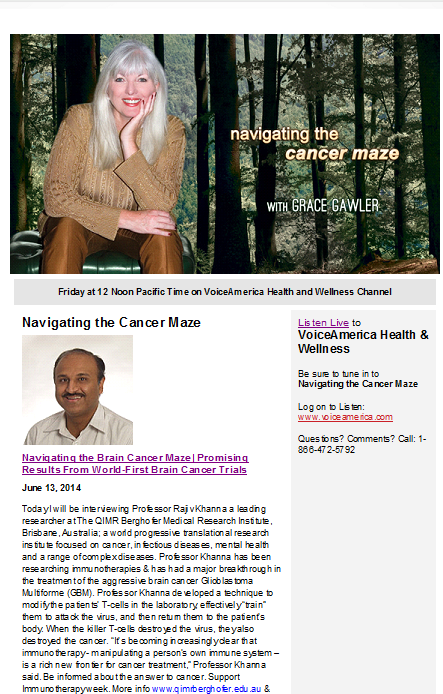
Why Immunotherapy Month has been a Symbol of Hope for Cancer Patients | Grace Gawler

This week on Navigating the Cancer Maze I re-presented an interview with Dr Horst Lindhofer PhD, Munich, Germany who was the creator of Tri-Functional antibodies. In the last segment – I provide an overview and more resources plus coming events for those who live in or near Brisbane.

This week on Navigating the Cancer Maze I re-presented an interview with Dr Horst Lindhofer PhD, Munich, Germany who was the creator of Tri-Functional immune systemantibodies. In the last segment – I provide an overview and more resources plus coming events for those who live in or near Brisbane. For more information visit:

 http://www.qimrberghofer.edu.au       Interview links:

  www.trionresearch.de           OR    www.neoviibiotech.com/contact.html

Immunotherapy is not new. It is interesting to take a look at the  History of Immunotherapy and it’s  pioneers.

In the 1850s, doctors in Germany noticed that patients’ tumours would occasionally shrink if their tumour became infected. This observation led to the idea that the body’s immune system could be harnessed and made to fight cancer.

Around the same time, doctors throughout Europe, encouraged by the success of Edward Jenner’s smallpox vaccine, attempted to make a ‘cancer vaccine’ by injecting patients with crude extracts of tumours from other cancer patients. These treatments were largely ineffective, but the field of ‘immunotherapy’ was born.

Initial progress on immunotherapy was slow, and over a hundred years’ work in the laboratory yielded little success in actual cancer treatment. This all changed when in 1975, Georges Köhler and César Milstein, working in Cambridge, discovered how to make synthetic antibodies.

Their discovery, coupled with an ever-increasing understanding of the immune system, has led to a variety of treatments and strategies that use the immune system to tackle cancer. Some, such as the antibody-based breast cancer drug Herceptin, are now used routinely to treat cancer patients.

Professor Jérôme Galon, Ph.D. whom I recently interviewed on Navigating the Cancer Maze received the William B. Coley Award in 2010. The award was established in 1975 in honor of Dr. William B. Coley, a pioneer of cancer immunotherapy, whose daughter, Helen Coley Nauts, founded Cancer Research Institute. To understand  Immunotherapy – please take 7 minutes to view this excellent video:

Immunotherapy: Boosting the immune system to fight cancer

[youtube https://www.youtube.com/watch?v=-NNjDjXSJt0]

William B. Coley, in 1891, injected streptococcal organisms into a patient with inoperable cancer. He thought that the infection he produced would have the side effect of shrinking the malignant tumor. He was successful, and this was one of the first examples of immunotherapy. Over the next forty years, as head of the Bone Tumor Service at Memorial Hospital in New York, Coley injected more than 1000 cancer patients with bacteria or bacterial products. These products became known as Coley’s Toxins. He and other doctors who used them reported excellent results, especially in bone and soft-tissue sarcomas.

Despite his reported good results, Coley’s Toxins came under a great deal of criticism because many doctors did not believe his results. This criticism, along with the development of radiation therapy and chemotherapy, caused Coley’s Toxins to gradually disappear from use. However, the modern science of immunology has shown that Coley’s principles were correct and that some cancers are sensitive to an enhanced immune system. Because research is very active in this field, William B. Coley, a bone sarcoma surgeon, deserves the title “Father of Immunotherapy.”

Further acceptance of his ideas was brought about by Coley’s own children. His son Bradley (1892-1961), also an orthopaedic surgeon, succeeded him as the head of the Bone Tumor Service at Memorial Hospital. Bradley Coley’s major textbook on bone tumors was published in 1948, and while advocating surgery as the main treatment for bone sarcomas, he supported the use of Coley’s toxin as adjunctive therapy. He believed that it would be of value in preventing micro-metastasis. His daughter, Helen Coley Nauts (1907-2001), became a cancer researcher and devoted her life to the study of her father’s toxins. She tabulated every patient he treated and reviewed all his notes. She published 18 monographs and tabulated over 1000 of his cases and noticed that in 500 of these there was near-complete regression. She founded Cancer Research Institute in New York. 

Read stories of patients successes immunotherapy trials from Cancer Research Institute at: Select from the menu ‘Who is the Immunocommunity’ and select the drop down menu ‘Patients Stories’

http://www.theanswertocancer.org/

Immunotherapy can be local or systemic.

Local immunotherapy delivers the treatment to the affected area. For example, the BCG vaccine can be injected into the bladder to treat bladder cancer, as it causes inflammation that can cause the tumour to shrink.

Systemic therapy treats the whole body and is useful for targeting cancer that may have spread. In the 1980s, scientists at the Cancer Research UK Medical Oncology Unit at the Christie Hospital in Manchester showed that the protein interferon alpha could cause tumours to shrink in patients with low-grade lymphoma. Interferon is now used to treat several different types of cancer.

Immunotherapy can also be non-specific or targeted.

Non-specific immunotherapy works by boosting the body’s immune system in general, so that its natural cancer-killing activity is enhanced. Both of the examples of local and systemic therapies (above) are also examples of non-specific immunotherapy.

Targeted immunotherapy is designed to make the immune system specifically kill cancer cells. The following types of targeted immunotherapy are available or are in development:

Antibody-based therapies

Antibodies are proteins produced by the immune system. A type of white blood cell called a B-cell produces them in response to an infection. Normally, antibodies stick to foreign objects in the body and label them for destruction. Researchers have been trying to make antibodies that will attach themselves only to cancer cells. This can be useful in four ways.

  • It can stop the cancer from growing by stopping other essential ‘growth factors’ from sticking to it.
  • It can ‘tag’ the cancer for destruction by the immune system.
  • If cancer drugs or radioactive particles are attached to the antibody, it can deliver them directly to the cancer cell without harming the rest of your body.
  • An enzyme (a type of protein that can promote chemical reactions) can be attached to an antibody, and then given to a patient along with a chemical that can be turned into a powerful drug by the enzyme. This directs the drug to the cancer, and minimise side effects. This process is known as Antibody-directed Enzyme/Pro-drug Therapy (ADEPT).

Sources: http://www.ncbi.nlm.nih.gov/pmc/articles/PMC1888599/

http://www.cancerresearchuk.org/

http://www.cancerresearch.org

http://www.qimrberghofer.edu.au/

FOR MORE INFORMATION ABOUT IMMUNO-THERAPY already available in Germany for Clinical use – please contact me via the contact form on this blog or email to my new email address for enquiries: germancancertreatments@gmail.com

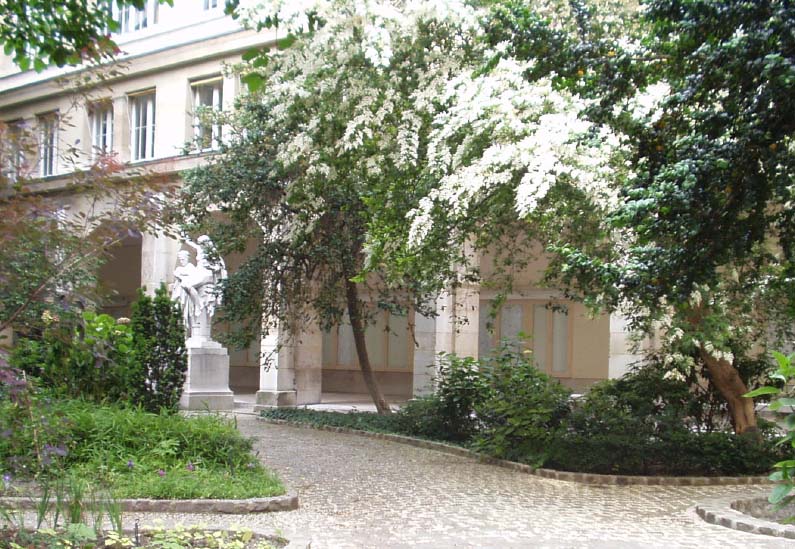
 

How our immune System Fights Cancer|Knowledge to Help you Navigate the Cancer Maze Grace Gawler & Prof Jerome Galon

Do want to get some insights into the intricate working of your immune system? Navigating the Cancer Maze, Grace Gawler interviews Prof. Dr. Jerome Galon: Research Director at INSERM (National Institute of Health and Medical Research) & leader of the INSERM Integrative Cancer Immunology laboratory, at the Cordeliers Research Centre, Paris, France.

Do want to get some insights into the intricate working of your immune system and cancer? On Navigating the Cancer Maze, internet radio Grace Gawler interviews Prof. Dr. Jerome Galon: Research Director at INSERM (National Institute of Health and Medical Research) & leader of the INSERM Integrative Cancer Immunology laboratory, at the Cordeliers Research Centre, Paris, France.

PROF DR. JEROME GALON

Listen to the show by selecting the following link:

http://www.voiceamerica.com/episode/78656/how-our-immune-system-fights-cancer-knowledge-to-help-you-navigate-the-cancer-maze


Professor Galon’s current interests & major contributions concern basic & translational research in cancer immunology, using systems biology.

His laboratory has made some ground-breaking findings demonstrating that the adaptive immune response within a tumor was a better predictor of survival than traditional staging based on the size and spread of a tumor.The new wave of immunotherapies reflects what has been known for some time; that the answer to cancer is in you! But it is not that simple. Our immune system is complex and intricate & as science unravels its mysteries, we are developing new understandings of how the immune system can be captured & recruited in the laboratory; retrained and returned to you the patient!

Awards: In 2008 Prof Dr Galon was awarded The Colon Cancer Research Schaeverbeke Award, Fondation de France,& the Clinical Research Award, Rose Lamarca, Fondation pour la Recherche Médicale.

INSERM UMRS1138  Laboratory of Integrative Cancer Immunology (Team 15) Cordeliers Research Center 15 Rue de l'Ecole de Medecine 75006 Paris, France
INSERM
Laboratory of Prof Jerome Galon Integrative Cancer Immunology (Team 15)
Cordeliers Research Center

In 2010 he received the William B. Coley Award from the Cancer Research Institute, NY, USA, 2011: the French National Academy of Science & the French National Academy of Medicine (2011) awards.

He has published many scientific papers and book chapters.


Health professionals and interested patients;

Visit INSERM UMRS 1138
Cordeliers Research Center
 at http://www.ici.upmc.fr/

For more about Integrative Cancer Immunology Laboratory and their research projects, Immunoscore, publications, seminars and links.

Health professionals – I especially recommend the Publications page and homepage side bar at INSERM’s website.

Prof Galon was a guest of QIMR Berghofer Medical Research Institute, Brisbane Qld , Australia. See their website at http://www.qimrberghofer.edu.au/

To listen to the audio – live streaming log on to the URL below. You can download this and other interviews with cancer experts at:

http://www.voiceamerica.com/episode/78656/how-our-immune-system-fights-cancer-knowledge-to-help-you-navigate-the-cancer-maze

To be continued……..

Enjoy the weekend….Grace

How Your Body Can Fight Cancer – Immunotherapies are on their way Grace Gawler with Professor Rajiv Khanna

How Your Body Can Fight Cancer – Immunotherapies are on their way! QIMR Brisbane is celebrating their cancer research findings by hosting a series of immunology presentations during Immunotherapy Week, June 15 – June 21 2014. Special Guest speaker will be Professor Jérôme Galon, Cordelier Research Center, Paris, France whose topic is “Cancer cure may be inside you and unleashed by immunotherapy”. To bring public awareness to Immunotherapy Week at the QIMR Berghofer Medical Research Institute, Brisbane Professor Rajiv Khanna Director of immunotherapy and vaccine development was interviewed on Navigating the Cancer Maze radio this week to publicize the need to bring research findings and medical trials into public awareness.

How Your Body Can Fight Cancer – Immunotherapies are on their way!

QIMR Brisbane is celebrating their cancer research findings by hosting a series of immunology presentations during Immunotherapy Week, June 15 – June 21 2014. Special Guest speaker will be Professor Jérôme Galon, Cordelier Research Center, Paris, France whose topic is “Cancer cure may be inside you and unleashed by immunotherapy”.

907477-rajiv-khannaTo bring public awareness to Immunotherapy Week at the QIMR Berghofer Medical Research Institute, Brisbane Professor Rajiv Khanna Director of immunotherapy and vaccine development was interviewed on Navigating the Cancer Maze radio this week to publicize the need to bring research findings and medical trials into public awareness. In particular he discusses his breakthrough immunotherapy research on Glioblastoma Multiforme.

As well on Navigating the Cancer Maze, Prof Khanna also discusses his research and clinical trial results on nasopharyngeal carcinoma, an aggressive throat cancer that has has shown response to immune therapies.

Image: Above – Cancer researcher Professor Rajiv Khanna, pictured with patient Eddie Chen, has developed a promising new treatment. Picture: Annette Dew Source: The Courier-Mail.

CLICK HERE to read Janelle Miles Courier Mail article – ‘Queensland Institute of Medical Research scientist Rajiv Khanna unveils promising new treatment for aggressive throat cancer’  published FEBRUARY 02, 2012

To listen to this very interesting and highly informative audio interview or to download on itunes (both free of charge), visit the link below direct to voice America and my show webpage.

http://www.voiceamerica.com/episode/78495/navigating-the-brain-cancer-maze-promising-results-from-world-first-brain-cancer-trials

Grace Gawler NAVIGATING THE CANCER MAZE eCard

Promising Results from World-First Brain Cancer Trials Professor Rajiv Khanna | Grace Gawler on Navigating The Cancer Maze

It is imperative that breakthroughs in cancer treatments are known to the world. Worldwide, there are an estimated 240,000 cases of brain and nervous system tumors diagnosed each year; GBM is the most common, and the most lethal of these tumors. People speak of the War on Cancer, but it is our bodies that are at war with cancer cells via our immune system and its responses. Utilizing the immune system principle, scientists at the QIMR Berghofer Medical Research Institute, Australia, have used immunotherapy to create a major breakthrough in the treatment of the brain cancer known as Glioblastoma Multiforme (GBM).

Free informational cancer seminars Brisbane June 15 – 21 2014 Brisbane.

Click the link below to see other events presented by QIMR – for immunology week June 15 – 21 2014 Brisbane.

How your body can fight cancer Seminars

cancer-lambert_2469736bPromising Results from World-First Brain Cancer Trials Professor Rajiv Khanna Joins Grace Gawler on Navigating The Cancer Maze To Talk about a Brain Cancer breakthrough.

Phoenix, AZ — 06/13/2014 — Voice America Talk Radio Network, Internet broadcasting pioneer, producing and syndicating online audio and video, today announced that Professor Rajiv Khanna QIMR Berghofer Medical Research Institute Australia will join Grace Gawler host of Navigating the Cancer Maze program on the VoiceAmerica Health and Wellness Channel (http://www.voiceamerica.com/show/2125/navigating-the-cancer-maze) Friday, June 13, 2014 at 12 noon Pacific Time.

NOTE: show goes live to air 5 am Brisbane Australia time Saturday 14 June 2014. Available streaming audio any time after 9 am this Saturday and available to download on itunes indefinitely.

It is imperative that breakthroughs in cancer treatments are known to the world. Worldwide, there are an estimated 240,000 cases of brain and nervous system tumors diagnosed each year; GBM is the most common, and the most lethal of these tumors. People speak of the War on Cancer, but it is our bodies that are at war with cancer cells via our immune system and its responses.  Utilizing the immune system principle, scientists at the QIMR Berghofer Medical Research Institute, Australia, have used immunotherapy to create a major breakthrough in the treatment of the brain cancer known as Glioblastoma Multiforme (GBM). Study leader, Professor Rajiv Khanna, said most of the study participants lived much longer than the six-month prognosis normally given to a patient with recurrent GBM, and some patients showed no signs of disease progression. “It is early days, but this is exciting,” Professor Khanna said.

“Survival rates for this aggressive cancer have barely changed in decades. There is an urgent clinical need for new treatments. “If this treatment can buy patients more time, then that is a big step forward.”

GBM
Image of Brain GBM

GBM is the most common malignant brain cancer, diagnosed in about 800 Australians every year.  Despite surgery, radiotherapy and chemotherapy, less than 10% of patients survive beyond five years. This study built on previous research which found that many brain tumours carry cytomegalovirus (CMV). About half of all Australians have the virus, but usually show no symptoms.

Professor Khanna developed a technique to modify the patients’ T-cells in the laboratory, effectively “train” them to attack the virus, and then return them to the patient’s body.  When the killer T-cells destroyed the virus, they also destroyed the cancer. “It’s becoming increasingly clear that immunotherapy – manipulating a person’s own immune system – is a rich new frontier for cancer treatment,” Professor Khanna said.

The QIMR is celebrating their research findings by hosting a series of immunology and cancer presentations between June 15 and June 21 in Brisbane. For those people who cannot attend, watch out on the websites for more information. www.qimrberghofer.edu.au   or  www.gracegawlermedia.com

The Phase I trials were conducted at Brisbane’s Wesley Hospital, under the leadership of neurosurgeon Professor David Walker.  “Working with patients with malignant brain tumors can be distressing, because we know so many will succumb,” Professor Walker said. “But this new branch of therapy lets us offer some hope that the future is going to be brighter, that new and innovative treatments mean things will hopefully improve in the future. “We have a long way to go, and there is hard work to be done, but we seem to be on the right track, and it is a pleasure to work with scientists at QIMR Berghofer to try to make a real difference.”

The research team is now keen to begin the next phase of trials, involving patients at an earlier stage of the cancer’s development. “These would be patients who have just been diagnosed and are about to start the standard treatments – surgery, then radiotherapy or chemotherapy.  We would generate the T cell therapy before their standard treatment, and then administer T cells in conjunction with the standard therapy,” Professor Khanna said.

“We hope that the treatment can be even more effective if given at an earlier stage of the disease.”

This study is published online in the prestigious US journal Cancer Research and can be viewed at http://cancerres.aacrjournals.org/content/early/recent

The research was funded by Flagship Funding from the Rio Tinto Ride to Conquer Cancer, the NHMRC and private donors.

The QIMR Berghofer Medical Research Institute is a world leading translational research institute focused on cancer, infectious diseases, mental health and a range of complex diseases. Working in close collaboration with clinicians and other research institutes, our aim is to improve health by developing new diagnostics, better treatments and prevention strategies.

For more information about QIMR Berghofer Visit: www.qimrberghofer.edu.au

Immunology and Cancer Survival | Navigating the Cancer Maze| Grace Gawler

QIMR Berghofer Medical Research Institute is hosting Immunotherapy week: Get updated about Immunotherapies. Next week QIMR presents a series of lectures about the latest developments in Cancer Immune therapies. QIMR’s Professor Khanna, has been researching immunotherapies and has had a major breakthrough in the treatment of the aggressive brain cancer Glioblastoma Multiforme (GBM).

ATTENTION Queenslanders interested in immune-based Cancer Therapies:  Cancer Immunotherapy Week Brisbane

QIMR Berghofer Medical Research Institute is hosting Immunotherapy week: Get updated about Immunotherapies. Next week QIMR presents a series of lectures about the latest developments in Cancer Immune therapies.

Scientists at the QIMR Berghofer Medical Research Institute have used immunotherapy to make a major breakthrough in the treatment of the aggressive brain cancer Glioblastoma Multiforme (GBM). There will be a presentation on Tuesday evening and other presentations throughout the week.

CLICK HERE FOR MORE INFORMATION

QIMR IMMUNOTHERAPY WEEK
Later this week on Navigating the Cancer Maze I will be interviewing…Professor Rajiv Khanna a leading researcher at The QIMR Berghofer Medical Research Institute, Brisbane, Australia; a world progressive translational research institute focused on cancer, infectious diseases, mental health and a range of complex diseases. Professor Khanna has been researching immunotherapies and has had a major breakthrough in the treatment of the aggressive brain cancer Glioblastoma Multiforme (GBM). Professor Khanna developed a technique to modify the patients’ T-cells in the laboratory, effectively “train” them to attack the virus, and then return them to the patient’s body.  When the killer T-cells destroyed the virus, they also destroyed the cancer. “It’s becoming increasingly clear that immunotherapy – manipulating a person’s own immune system – is a rich new frontier for cancer treatment,” Professor Khanna said. Be informed about the answer to cancer. Support Immunotherapy week- Brisbane Qld. More info at http://www.qimrberghofer.edu.au/

All shows are available in the content Library at Navigating the Cancer Maze on The VoiceAmerica Variety Channel for on-demand and pod cast download. The Grace Gawler Institute is a not for profit health promotion charity providing global access to free information for cancer patients about the latest in cancer information and treatments from experts, patients, caregivers and researchers.

Visit:  http://www.gracegawlerinstitute.com

Navigating the Cancer Maze | i am the answer to cancer |Cancer Immunotherapy Month

Navigating the Cancer Maze | i am the answer to cancer |Cancer Immunotherapy Month. Where is the answer to cancer? According to Jill O’Donnell-Tormey, Ph.D and the organization she represents,Cancer Research Institute (CRI); the answer is ‘i am the answer to cancer’; yes-the patients immune system holds the answer to cancer!

Navigating the Cancer Maze | i am the answer to cancer |Cancer Immunotherapy Month
June 6, 2014
Did you know that June is Cancer Immunotherapy Month? Tune in to Navigating the Cancer Maze for inspiring listening and learn about the good news – the Answer to Cancer
Dr. Jill O'Donnell-Tormey PhD CEO Cancer Research Institute NY
Dr. Jill O’Donnell-Tormey PhD CEO Cancer Research Institute NY

Where is the answer to cancer? According to my guest Jill O’Donnell-Tormey, Ph.D and the organization she represents,Cancer Research Institute (CRI); the answer is ‘i am the answer to cancer’; yes-the patients immune system holds the answer to cancer! Select link below to listen to audio

http://www.voiceamerica.com/episode/78363/navigating-the-cancer-maze-i-am-the-answer-to-cancer-cancer-immunotherapy-month

The CRI is a non-profit organization founded in 1953 & today’s global leader in supporting & coordinating research aimed at harnessing the immune system’s power to conquer all cancers. Jill will explain immunotherapy & its value to cancer patients as well as the different types of cancer immunotherapy available. There will be patient stories & an exploration of the very latest in immunotherapy. A New Cancer Immunotherapy Website for Patients and Caregivers was launched recently. Get on board with supporters like Olivia Newton John who recently lent public support to CRI.   http://www.cancerresearch.org         http://www.TheAnswerToCancer.org

Listen to Navigating the Cancer Maze 12 Noon Fridays – live from Arizona (PST) – Saturday Australia 5am free to air or download and listen later – available free download on itunes.

READ MORE:

http://www.sbwire.com/press-releases/dr-jill-odonnell-tormey-phd-ceo-director-of-scientific-affairs-of-the-cancer-research-institute-ny-joins-grace-gawler-on-navigating-the-cancer-maze-to-talk-about-cancer-immunotherapy-month-516331.htm

LISTEN TO INTERVIEW:

http://www.voiceamerica.com/episode/78363/navigating-the-cancer-maze-i-am-the-answer-to-cancer-cancer-immunotherapy-month

Please remember to Like us facebook & spread the good news about the Answer to Cancer!

CIM-homepage-slider_Cancer-Immunotherapy-Month_960x395-JUNE

The Dangers of Meditation. Advice for Meditators. An interview with Leigh Brasington by Willoughby Britton.

Meditation can open a can of worms in our psychology. This is a surprise to many people. I have often asked my self the same question that is explored in the first paragraph of this blog. For people who are dealing with illness, such as cancer; care must be taken whilst developing a practice that will assist and not detract from their recovery. Many people around the Globe are turning toward Buddhist practices of meditation. This excellent blog brings to light something that is little discussed in meditation circles – the dangers and issues that can be associated with meditation.

Meditation can open a can of worms in our psychology. This is a surprise to many people. I have often asked my self the same mindfulnessquestion that is explored in the first paragraph of this blog (see below).

For people who are dealing with illness, such as cancer; care must be taken whilst developing a practice that will assist and not detract from their recovery.

Many people around the Globe are turning toward Buddhist practices of meditation.

This excellent blog brings to light something that is little discussed in meditation circles – the dangers and issues that can be associated with meditation. I also suggest that you read http://youreternalself.com/meditation.htm

To Meditate or Medicate – That is the Question? Voice America Experience with Meditation and Cancer Recovery

Can meditation be powerful enough to impact chronic illness? Is there any conclusive evidence that the mind via meditative practices can “cure” or influence the growth of cancer”? With rising healthcare costs more and more people are turning to self-help books and natural methods in an attempt to ‘cure’ cancer.

PART ONE : Can meditation be powerful enough to impact chronic illness? Is there any conclusive evidence that the mind via meditative practices can “cure” or influence the growth of cancer”? With rising healthcare costs more and more people are turning to self-help books and natural methods in an attempt to ‘cure’ cancer. ‘The mind can cure cancer concept’ is not new. Every few decades, the notion of meditation as a ‘cure’ for cancer, seems to be recycled into public awareness. In today’s show, with 40 years experience, I will share personal insights from clinical practice & discuss the historical timeline of meditative practices and cancer. I also discuss in general terms, the realistic impact of meditative practices on health and wellbeing and help to put into perspective; it’s role in healing.
Listmeditationen free to air or download from iTunes:

http://www.voiceamerica.com/episode/78194/to-meditate-or-medicate-that-is-the-question-experiences-with-meditation-and-cancer-recovery

Background:

As I researched the latest finding on what meditation can and cant do; the aspects that stood out are as follows:

1. When we look at stories of ‘cures’ associated with Meditation or other event such as prayer healing  etc – There are many anecdotes where blind faith comes into play. Over centuries people have had a need to believe in a greater force that gives us faith and hope to go on and to make sense of life. When we examine these stories we often have no idea of their true origin. Was someone mistaken when they diagnosed a cancer? Beliefs run strong, as do people’s ideologies and need to see & believe in miracles; it is difficult to separate the wheat from the chaff. Just because something is written or appears to be so – doesn’t mean it is fact.

A humorous story illustrates how easy it is to base an opinion on incomplete facts. John Locke (1632-1704) related this story about the Dutch ambassador and the king of Siam: While describing his country, Holland, to the king, the ambassador mentioned that at times it was possible for an elephant to walk on water. The king rejected the idea and felt that the ambassador was lying to him. However, the ambassador was merely describing something that was beyond the king’s personal experience. The king did not realize that when water freezes and becomes ice, it can support the weight of an elephant. This seemed impossible to the king because he did not have all the facts.

The issue with meditation in terms of health value  is that it has been promoted in some literature and journals to be a cure or a significant part of a cure for cancer.  A wide range of meditative practises clearly can assist cancer patients or those with serious illness – helping with improving life quality and awareness contemplation as life itself is challenged – that is by a diagnosis of a serious illness. However, Claims of cancer being cured by meditation alone are often misguided or misreported.  Look for the science. Was there proof by biopsy? Has the whole story been reported? Could there be other logical reasons for a recovery? This is important as for example, cancer patients quote again and again … “If Ian Gawler can do it ( cure himself of cancer ) then I can do it too”. More on this in next blog.

That brings me to looking at some the facts of how meditation/stress reduction techniques can be proven to impact the miracle of mindfulnesssome of our body’s restorative systems and how it can be simply and practically used everyday by simply being you. See Resources below. I like what Thich Nhat Hanh, author The Miracle of Mindfulness said  about meditation:

“Hanh warns that meditation should not be an escape from reality. On the contrary, it should lead to an increased awareness of reality.

Hanh summarizes the lessons by presenting a story about the three wondrous answers to the questions — What is the best time to do a thing? Who are the most important people to work with? and What is the most important thing to do at all times?


Hanh suggests that we treat each of our activities as an opportunity for being aware: Walking, we should be aware that we are walking. 

Breathing,-we should be aware of our breathing. We should not focus on anything other than the thing that we are doing.  One of the key methods that Hanh presents is learning to be aware of breathing.

Resources to read:

http://www.globalhealthandtravel.com/health/TheBenefitsofDeepBreathing   Value of Breath

http://www.relaxationresponse.org/  Herbert Benson studies and book

http://en.wikipedia.org/wiki/Jon_Kabat-Zinn

Thich Nhat Hanh

To Be continued……..More Tomorrow on meditation and cancer with Resources.

Enjoy ……..

Grace

David Tuccaro Jr Bad to the Bone| Surviving Leukemia on Voice America

This week on Navigating the Cancer Maze, due to popular demand, I have provided an encore of my interview from March this year with David Tuccaro Jr. whose inspiring story “Bad to the Bone” has touched many thousands of people worldwide. is story has been chronicled in his recent memoir, Bad to the Bone: The True Story of David Tuccaro Jr. The book is written by award-winning author Marala Scott through a series of interviews with David. Marala Scott is Oprah’s Ambassador of Hope.

This week on Navigating the Cancer Maze, due to popular demand, I have provided an encore of my interview from March this Bad to the bone David Tuccaro Jryear with David Tuccaro Jr. whose inspiring story “Bad to the Bone” has touched many thousands of people worldwide. If you missed the interview and or if you know someone who is going through the experience of leukemia – please direct them to listen to streaming audio on Voice America or download for free from iTunes.

http://www.voiceamerica.com/episode/78054/special-encore-presentation-beating-leukemia-bad-to-the-bone-the-true-story-of-david-tuccaro-jr-on

David Tuccaro Jr. is a Mikisew Cree First Nation man who overcame his fight with Leukemia. His story has been chronicled in his recent memoir, Bad to the Bone: The True Story of David Tuccaro Jr. The book is written by award-winning author Marala Scott through a series of interviews with David. Marala Scott is Oprah’s Ambassador of Hope. David was born and raised in Ft. McMurray, Canada. His story tells of a tumultuous journey of self-discovery through pain, hopelessness and the feeling of inadequacy, to go on to inspire others to overcome adversity. After finding his life purpose through his illness, he is living out his passion of teaching others to save lives by registering to become a bone marrow donor. David spends his free time with his family and enjoying music. He is a very inpirational young man. For more information about David Tuccaro Jr. visit: www.davidtuccaro.com  You can buy his book via his website or on amazon eBOOK or hard copy:
http://www.amazon.com.au/Bad-To-The-Bone-Tuccaro-ebook/dp/B00GEA558W

View our You Tube promotion about David Tuccaro Jr. below

[youtube http://www.youtube.com/watch?v=bf3AQocgO8w]
To listen to the full interview with David Tuccaro – select the link below which will direct you to Voice America’s health and Wellness Channel:
http://www.voiceamerica.com/episode/78054/special-encore-presentation-beating-leukemia-bad-to-the-bone-the-true-story-of-david-tuccaro-jr-on


ABOUT Grace Gawler and Navigating the Cancer Maze:
2014 marks Grace Gawler 40 years assisting cancer patients to Navigate the Cancer Maze as effectively as possible. Navigating the cancer maze fulfill Grace’s vision to provide a sponsored show through her Charity so that cancer patients can hear expert Professionals and hear authentic cancer survival stories. The show aims to share time-proven strategies in a “Let’s talk about it” atmosphere with the aim of making the journey through cancer more easeful through knowledge. The program is solutions focused for patients at all stages of cancer and provides tools for pre-planning for any setbacks that are likely to be met along the way. It is important to acknowledge the reality of a cancer diagnosis, while being authentic about process and keeping possibilities open. The best outcomes are experienced when the best of conventional medicine is paired with the best of complementary supported by an empowered patient. Navigating the Cancer Maze airs live every Friday at 12 Noon Pacific Time on the VoiceAmerica Health and Wellness Channel. www.gracegawlerinstitute.com

Grace Gawler interviews Dr Bruce Whelan |How to Navigate the Cancer Maze with the Help of your General Practitioner

Grace Gawler Interviews Dr Bruce Whelan a specialist GP who has been in Practice for 45 years. A previous guest on the show, episode titled ‘Spinning Gold from Straw: How trauma transformed a Doctor’s Life and Practice’; today I will be asking him about his role as a GP. ersonal involvement with the Bali bombings in 2002 made an impact of his life & practice leading to his interest in psychiatry. His special areas of interest are general psychiatry, drug addiction medicine, pain management & issues related to cancer medicine.

Navigating the Cancer Maze – with Grace Gawler:

How to Navigate the Cancer Maze with the Help of your General Practitioner—Cancer Practice & Emotional Medical Apple shutterstock_70520200Support

Listen to the Show-Free to download for listening later or listen online:

http://www.voiceamerica.com/episode/77930/how-to-navigate-the-cancer-maze-with-the-help-of-your-general-practitioner-cancer-practice-and

Dr Bruce Whelan is a specialist GP who has been in Practice for 45 years. A previous guest on the show, episode titled ‘Spinning Gold from Straw: How trauma transformed a Doctor’s Life and Practice’; today I will be asking him about his role as a GP. The role of the GP is ever-changing; once the family doctor who made house calls and knew the names of all of a patient’s family members, the role of the GP has morphed into rapid delivery medicine with time constraints. However, there is a new and emerging role for GP’s in cancer and supportive Care medicine. The need is great for patients and families and a new model of care is timely. A graduate of the University of Queensland School of Medicine-1967, Dr Bruce Whelan has been in general practice since 1971.

He also specializes in pain management, so I will be specifically asking him about pain management in cancer medicine.


BIO DR Bruce Whelan – Specialist GP

 Dr Bruce Whelan has been in general practice since 1971. Dr Bruce Whelan specialist GPHe has worked in challenging rural Australia practice environments including indigenous health.

With 45 years experience, his ethic is treating the whole person using the best of modern psychology & general psychiatry in combination with the best of modern medicine. Personal involvement with the Bali bombings in 2002 made an impact of his life & practice leading to his interest in psychiatry. His special areas of interest are general psychiatry, drug addiction medicine, pain management & issues related to cancer medicine.

He has been involved with teaching medical students at Bond & Griffith Medical Schools Gold Coast Australia. He has a deeply inquiring mind, sharp differential diagnosis skills, & his experience as a GP who understands his patients’ grief and trauma is invaluable. He lives on a yacht, loves fishing, oil painting, classical music & life!

http://www.voiceamerica.com/episode/77930/how-to-navigate-the-cancer-maze-with-the-help-of-your-general-practitioner-cancer-practice-and


error: Content is protected !!