Steve Jobs case reveals alternative medicine dangers in cancer treatment-Grace Gawler

 Biography reveals that Apple’s Steve Jobs refused potentially life-saving surgery on his pancreatic cancer because he felt it was too invasive. Nine months later, he got the operation but it was too late.

The next time you hear of an miraculous natural cancer cure remember the words of the late Carl Sagan – “Exceptional claims require exceptional evidence.” Personally after nearly 4 decades of working in strategies to manage and recover from cancer, I remain surprised and shocked at the numbers of  patients refusing surgery or valid treatments only to try some miraculous cure based on anecdotes and with little or no evidence. If patients really understood the nature of cancer and how it behaves and metastasizes (spreads through the body) – I believe they would make different choices. (More on this topic next blog)

Take the example of two patients who 9 years ago were diagnosed with the same type of breast cancer with the same hormonal status and one positive lymph node. One patient went the conventional route – surgery, chemo and a hormone blocking agent – she remains well and vibrant to this day.
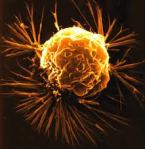
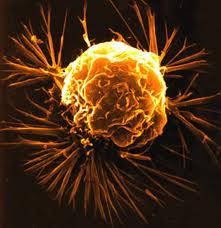
Breast Cancer Cell

The other lady – like Steve Jobs, believed surgery was too invasive so she chose to keep her lump and node after a she received her biopsy result. Rather than booking in for the surgeon, she fled  to a well known cancer naturopath who advised to her to fast, juice and take a variety of herbs and supplements as well as other treatments such as Scalar energy. Her  treatments cost her a small fortune. Although she had massive tumour development by the time she found me, 7 years on…she believed that the tumours were resolving by  simply “coming out” of her body, a theory condoned by the naturopath concerned who also  that said all her ‘test’ results were excellent, therefore she must need emotional healing. This lovely lady had more secondary tumours than I had seen in my 4 decades of working in this field.
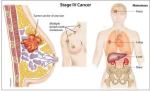
Stage 1V breast cancer

She passed away this year after a hellish battle for her life – her final months extended by compassionate conventional medicine.  By the time she realised what she had chosen was not working and that she had listened to the wrong people – it was indeed too late. There is a mantra repeated daily in my practice.. “I wish I had come sooner!”
Recently while in conversation with a friend – another most unfortunate story came to light; sadly it is also a story I hear all too often and it has the same tone as  Steve Job’s outcome and my above mentioned patient. Continue reading “Steve Jobs case reveals alternative medicine dangers in cancer treatment-Grace Gawler”

Steve Jobs leaves a teaching legacy for all cancer patients says Grace Gawler

Apple’s CEO Steve Jobs recent death from neuro-endocrine pancreatic cancer has once again highlighted the need for more public awareness surrounding issues of alternative medicine and the role of belief systems in cancer treatment choices i.e. alternative versus conventional medicine – when ideologies take over, negating logic and scientific evidence. Steve Jobs was not alone; our institute is very concerned at the large numbers of cancer patients trying alternative medicine as their first-line treatment option.

I say this with respect – but the question begs – what drove a man like Steve Jobs to believe he could beat operable cancer by using the same “alternative” tools he had been using for most of his life? Albert Eistein said: “No problem can be solved from the same level of consciousness that created it.” In my clinic I  see many patients who have been loyal to an alternative lifestyle ) including alt med, for most of their life and when they get cancer diagnosed – they simply do more of it in pursuit of a cure! Almost a pray harder mentality.

Apparently, even a close friend with prostate cancer who was in remission, advised Jobs not to take the alternative medicine path – yet at great personal risk, he refused surgery to experiment with natural therapies. Natural Health News editor – Mike Adams was quick to gain kudos and write about Job’s death on October 5 stating that he died because of conventional medicine – however information released from Apple Corporation soon revealed a very different story – Adams had incorrectly reported the story – indeed it was quite the opposite. Continue reading “Steve Jobs leaves a teaching legacy for all cancer patients says Grace Gawler”

Survive and Thrive One Day Intensives – an Antidote to Alternative Medicine – Grace Gawler Institute

What is the best path for cancer patients?   The new Grace Gawler Institute’s Survive and Thrive One-Day Intensives are designed to streamline the cancer experience, take away the confusion and replace it with confidence by learning the “How Tos” of being a successful patient. Being a Successful patient is not always about conquering cancer – sometimes it is living well with cancer while extending life that exudes good quality – while other times it may be an unexpected remission or partial remission. One thing that experience tells me  is that 99% of patients will benefit enormously from the Grace Gawler Institute’s approach.

I believe that with good oncological advice/treatment in combination with support and skilled psycho-oncology, that patients give themselves the best chance. With modern advances in cancer medicine – the longer you live with it and manage it, the greater the chance of a new breakthrough treatment. For example, if you did not see last Monday’s Australian Story – I recommend you view this inspiring documentary about two Australian scientists and their quest for one of medicine’s holy grails  – finding a way to treat cancer without the side effects.
http://www.abc.net.au/austory/specials/fortheholygrail/default.htm

The  two scientists epitomise care and compassion in what can appear to be a heartless and mercenary profession.  I believe it is essential that we rise above the old negative paradigms of conspiracies about research and ‘big bad Pharma’ and embrace the true holistic model of medicine. It is hard to imagine where we would all be without modern medicines assistance. This is true complementary medicine and in the true sense of the word; it is holistic medicine. To not include conventional medicine as a part of a holistic medicine model (i.e. truly treating the whole person) is quite ludicrous in 2011. Body, mind, emotion and spirit all need attention. If a cancer is ravaging the body – doesn’t it make sense to treat the body and all its compartments and psychology by the best means possible? Continue reading “Survive and Thrive One Day Intensives – an Antidote to Alternative Medicine – Grace Gawler Institute”

Beating the Silence Again Grace Gawler

In 2007 Katherine Kizilos wrote a feature article for the Age newspaper Melbourne. The article begins…” She survived her husband’s illness only to fall prey herself to disease but Katherine Kizilos finds that Grace Gawler used the experience to launch a new life.”Gawler is a name familiar to those who want

Photo : The Mebourne Age

to believe the human spirit conquers disease. Ian Gawler lost his leg to bone cancer but not his life and with wife Grace established in 1981 Australia’s first cancer support service, the Gawler Foundation. CLICK HERE TO READ FULL ARTICLE

My life has had a theme of  issues pertaining to silence – holding silence where appropriate, and breaking silence when essential!

My book Women of Silence (1994) was the first to open doors of communication surrounding breast cancer and emotional recovery – a little spoken of issue in those days; it formed the basis of breast cancer support groups in Australia.
Katherine Kizilos’ 2007 article  after more than 2 decades of silence was the first article to publicly raise the the issue of Ian Gawler’s remission from cancer being in some way associated with tuberculosis – a very important scientific connection to make in the interest of cancer patients. An opportunity to discuss this important topic resurfaced in 2010 when the (MJA) Medical Journal of Australia published my refute letter in response to an incorrect version of Ian’s recovery story that appeared in the MJA in December 2008, under the title “True Stories”. But then – more silence…. with most newspaper medical reporters refusing to comment, with one exception! Continue reading “Beating the Silence Again Grace Gawler”

Grace Gawler Writes About Beliefs, Cancer & the Power of Placebo in Survival Part 3

Can placebo heal? Can placebo provide a short term burst of hope based on belief?  Remember from our first post that from Latin placebo means ‘I shall please’ whereas Nocebo means ‘I shall harm’. Just how powerful are words of power, thoughts and beliefs?
With these definitions in mind, consider the  following stories. They powerfully demonstrate how belief systems can either turn on or turn off the will to live and how inexplicable healing can sometimes occur through belief.  Consider the power of Sovereigns to heal in medieval  times and the power of prayer
It is interesting to remember how the Royal Touch was believed to heal and bless.  With the spread of Christianity, monarchs were seen as religious figures with magical or curative powers. It was believed that Royal Touch, the touch of the sovereign of England or France, could cure diseases due to the devine right of sovereigns. Members of the royal courts often propagandized that those receiving the Royal Touch were miraculously healed. André du Laurens, the senior physician of Henry IV, publicized findings that at least half of those that received the Royal Touch were cured within a few days. Then we have the story of St peregrinus – the Patron Saint of Cancer. 
Near the end of the thirteenth century a zealous young priest of the order of

Patron Saint of Cancer Patients

Servites fell ill with a painful cancer of the foot. He bore his trial without a murmur and, when it was decided that amputation should be performed, he spent the night preceding the operation in prayer before his crucifix. He then sank into a light slumber from which he awoke completely cured—to the amazement of the doctors who could no longer detect any trace of the disease. The holy man lived to the age of eighty and died in sanctity. He became known as St. Peregrinus, the patron saint of cancer.

In this context – I introduce  two other sources for placebo – Both are from an indigenous source. I encourage you to consider the difference between an uneducated person who accepts their cultural beliefs and background including those in authority and our  current Western style culture where education levels are  a higher standard and where tradition and authority is often scorned or rebelled against. Did these simple beliefs and rituals have a ‘magical’ placebo effect?

The following stories  from the 1800’s were both recorded by medical physiologist Walton Cannon and concern  Australian experiences – the first one being an indigenous Australian account and the second – a Kanaka from the Polynesian Islands. From his diary he states:
“Dr. S. M. Lambert of the Western Pacific Health Service of the Rockefeller Foundation wrote to me on several occasions as he had seen evidence of death from fear. In one case there was a startling recovery. At a mission at Mona Mona in North Queensland, were many native converts, but on the outskirts of the mission was a group of non-converts, including one “Nebo”, a famous witch doctor. The chief helper of the missionary was Rob, a native who had been converted. When Dr. Lambert arrived at the Mission he learned that Rob was in distress and that the missionary wanted him examined. Dr. Lambert made the examination, and found no fever, no complaint of pain, no symptoms or signs of disease. He was impressed, however, by the obvious indications that Rob was seriously ill and extremely weak. From the missionary he learned that Rob had had a bone pointed at him by Nebo and was convinced that, in consequence, he must die. Thereupon, Dr. Lambert and the missionary went for Nebo, threatened him sharply that his supply of food would be shut off if anything happened to Rob and that he and his people would be driven away from the  mission. At once Nebo agreed to go with them to see   Rob. He leaned over Rob’s bed and told the sick man that it was all a mistake, a mere joke…indeed, that he had not pointed a bone at all.
The relief, Dr. Lambert testifies, was almost instantaneous. That evening Rob was back at work, quite happy again and in full possession of his physical strength.
A less fortunate outcome is reported in the next account.

Continue reading “Grace Gawler Writes About Beliefs, Cancer & the Power of Placebo in Survival Part 3”

Grace Gawler Writes About Beliefs, Cancer & the Power of Placebo in Survival Part 3

Can placebo heal? Can placebo provide a short term burst of hope based on belief?  Remember from our first post that from Latin placebo means ‘I shall please’ whereas Nocebo means ‘I shall harm’. Just how powerful are words of power, thoughts and beliefs?
With these definitions in mind, consider the  following stories. They powerfully demonstrate how belief systems can either turn on or turn off the will to live and how inexplicable healing can sometimes occur through belief.  Consider the power of Sovereigns to heal in medieval  times and the power of prayer
It is interesting to remember how the Royal Touch was believed to heal and bless.  With the spread of Christianity, monarchs were seen as religious figures with magical or curative powers. It was believed that Royal Touch, the touch of the sovereign of England or France, could cure diseases due to the devine right of sovereigns. Members of the royal courts often propagandized that those receiving the Royal Touch were miraculously healed. André du Laurens, the senior physician of Henry IV, publicized findings that at least half of those that received the Royal Touch were cured within a few days. Then we have the story of St peregrinus – the Patron Saint of Cancer. 
Near the end of the thirteenth century a zealous young priest of the order of

Patron Saint of Cancer Patients

Servites fell ill with a painful cancer of the foot. He bore his trial without a murmur and, when it was decided that amputation should be performed, he spent the night preceding the operation in prayer before his crucifix. He then sank into a light slumber from which he awoke completely cured—to the amazement of the doctors who could no longer detect any trace of the disease. The holy man lived to the age of eighty and died in sanctity. He became known as St. Peregrinus, the patron saint of cancer.

In this context – I introduce  two other sources for placebo – Both are from an indigenous source. I encourage you to consider the difference between an uneducated person who accepts their cultural beliefs and background including those in authority and our  current Western style culture where education levels are  a higher standard and where tradition and authority is often scorned or rebelled against. Did these simple beliefs and rituals have a ‘magical’ placebo effect?

The following stories  from the 1800’s were both recorded by medical physiologist Walton Cannon and concern  Australian experiences – the first one being an indigenous Australian account and the second – a Kanaka from the Polynesian Islands. From his diary he states:
“Dr. S. M. Lambert of the Western Pacific Health Service of the Rockefeller Foundation wrote to me on several occasions as he had seen evidence of death from fear. In one case there was a startling recovery. At a mission at Mona Mona in North Queensland, were many native converts, but on the outskirts of the mission was a group of non-converts, including one “Nebo”, a famous witch doctor. The chief helper of the missionary was Rob, a native who had been converted. When Dr. Lambert arrived at the Mission he learned that Rob was in distress and that the missionary wanted him examined. Dr. Lambert made the examination, and found no fever, no complaint of pain, no symptoms or signs of disease. He was impressed, however, by the obvious indications that Rob was seriously ill and extremely weak. From the missionary he learned that Rob had had a bone pointed at him by Nebo and was convinced that, in consequence, he must die. Thereupon, Dr. Lambert and the missionary went for Nebo, threatened him sharply that his supply of food would be shut off if anything happened to Rob and that he and his people would be driven away from the  mission. At once Nebo agreed to go with them to see   Rob. He leaned over Rob’s bed and told the sick man that it was all a mistake, a mere joke…indeed, that he had not pointed a bone at all.
The relief, Dr. Lambert testifies, was almost instantaneous. That evening Rob was back at work, quite happy again and in full possession of his physical strength.
A less fortunate outcome is reported in the next account.

Continue reading “Grace Gawler Writes About Beliefs, Cancer & the Power of Placebo in Survival Part 3”

Grace Gawler Writes About Beliefs, Cancer & the Power of Placebo in Survival Part 2

DIAGNOSIS, PROGNOSIS AND BEYOND ( adapted from Women of Silence – The Emotional Healing of Breast Cancer-Grace Gawler pub  1994, 2003. Click here to buy your copy – also available in e-Book.) Only available from the author.

It was noticeable in the early days of conducting support groups, that when people spoke of their lives and their cancers, other patients in the room would begin to nod knowingly as they identified how their own story aligned with those dealing with the same cancer.
We all have an ability to switch off our life force and lose our passion for living. There are many stories from indigenous cultures of people who consciously died because they believed the would. Perhaps such a message triggers a powerful belief that causes the soul to leave.  This ability has also been demonstrated in many indigenous cultures including the Australian aborigine, the Kikuyu of Kenya and the bushmen of the Kalahari. There have been many instances of this phenomenon. These cultures live very much in the here and now, so when imprisoned, they believe it is forever and they simply die. They lose their will to live or will to be because they see no end to their situation. Tribal indigenous Australians are  known for the phenomenon of “bone pointing” where healthy individuals die because their belief system supports the tribes medicine man who has a position of power and authority.

There are parallels between these experiences and the experiences of those diagnosed with a life threatening illness. Often, much depends on how the diagnosis and prognosis are delivered to the patient. At a vulnerable moment, information poorly delivered by a doctor and/or poorly received by the patient can cause the spirit to retreat and withdraw, eventually resulting in death. I have known many patients with six months to live who die almost to the day as if set by some invisible internal clock. When lack of hope and possibility are vocalised by a person of power, the patient is, at that moment, faced with a life and death decision. So powerful can it be, that all else, all survival messages, are filtered out of the patient’s awareness and the process of dying begins. Continue reading “Grace Gawler Writes About Beliefs, Cancer & the Power of Placebo in Survival Part 2”

Grace Gawler Writes About Beliefs, Cancer & the Power of Placebo in Survival Part 2

DIAGNOSIS, PROGNOSIS AND BEYOND ( adapted from Women of Silence – The Emotional Healing of Breast Cancer-Grace Gawler pub  1994, 2003. Click here to buy your copy – also available in e-Book.) Only available from the author.

It was noticeable in the early days of conducting support groups, that when people spoke of their lives and their cancers, other patients in the room would begin to nod knowingly as they identified how their own story aligned with those dealing with the same cancer.
We all have an ability to switch off our life force and lose our passion for living. There are many stories from indigenous cultures of people who consciously died because they believed the would. Perhaps such a message triggers a powerful belief that causes the soul to leave.  This ability has also been demonstrated in many indigenous cultures including the Australian aborigine, the Kikuyu of Kenya and the bushmen of the Kalahari. There have been many instances of this phenomenon. These cultures live very much in the here and now, so when imprisoned, they believe it is forever and they simply die. They lose their will to live or will to be because they see no end to their situation. Tribal indigenous Australians are  known for the phenomenon of “bone pointing” where healthy individuals die because their belief system supports the tribes medicine man who has a position of power and authority.

There are parallels between these experiences and the experiences of those diagnosed with a life threatening illness. Often, much depends on how the diagnosis and prognosis are delivered to the patient. At a vulnerable moment, information poorly delivered by a doctor and/or poorly received by the patient can cause the spirit to retreat and withdraw, eventually resulting in death. I have known many patients with six months to live who die almost to the day as if set by some invisible internal clock. When lack of hope and possibility are vocalised by a person of power, the patient is, at that moment, faced with a life and death decision. So powerful can it be, that all else, all survival messages, are filtered out of the patient’s awareness and the process of dying begins. Continue reading “Grace Gawler Writes About Beliefs, Cancer & the Power of Placebo in Survival Part 2”

Grace Gawler Writes About the Placebo Effect in Healing and Cancer Part One

What is a Placebo? The Placebo effect (Latin placebo, “I shall please”), also known as non-specific effects and the subject-expectancy effect, is the phenomenon that a patient’s symptoms can be alleviated by an otherwise ineffective treatment, since the individual expects or believes that it will work. Some people consider this to be a remarkable aspect of human physiology; others consider it to be an illusion arising from the way medical experiments were conducted.

What is Nocebo effect: In the opposite effect, a patient who disbelieves in a treatment may experience a worsening of symptoms. This nocebo effect (nocebo translates from Latin as “I shall harm”) can be measured in the same way as the placebo effect, e.g., when members of a control group receiving an inert substance report a worsening of symptoms. The recipients of the inert substance may nullify the placebo effect intended by simply having a negative attitude towards the effectiveness of the substance prescribed, which often leads to a nocebo effect, which is not caused by the substance itself, but more the patient’s mentality towards her or his ability to get well. (source Wiki Psychology)

Doctor-Patient Relationship and Placebo:

ABC TV Australia 26 May 2011 broadcast – This was a most useful and interesting segment and gave a terrific layman’s explanation of this complex area of healing.

The power of vodoo and hex or… in other words placebo (I shall please) and nocebo (I shall harm) is  discussed in these two short videos copied from ABC’s Catalyst website. If you missed the program or even if you watched it; I suggest you take another look. The PET scan images at the end of the video titiled Vodoo –  provide some tangible explanations as to why some people are susceptible to placebo and power of suggestion than others. The outcome of a pain test reveals that subjects who are susceptible to the placebo effect produce significant amounts of opioids and the outcome of reduced pain. In fact these subjects can produce in their brain the equivalent of 10 mg or more of morphine! Others in the experiment for whom placebo did not work (15%) –  experienced a nocebo effect –  a decrease of opioids and therefore increased pain. Select video link below.
http://gracegawler.com/data/video/catalyst_s12_ep14_Voodoo.wmv

PET and MRI brain scans were combined to make these images, illustrating activity in the brain’s mu opioid system. On top, study participants were experiencing pain. On the bottom, they thought they were receiving an injection of painkiller medicine that was actually a placebo. Image Courtesy of University of Michigan

 Why are some people susceptible to Placebo and others not? Continue reading “Grace Gawler Writes About the Placebo Effect in Healing and Cancer Part One”

Grace Gawler Grace Gawler Institute – why alternative medicine is often not enough in cancer treatment.

Part one of Understanding Cancer:
A key function of the Grace Gawler Institute is education about cancer. Being a veteran – I have seen a lot during my 35 years of working with cancer patients. Most cancer patients I see in my practice have foregone conventional therapy for what appears to be the more logical solution of natural remedies. Some choose not to have surgery and go totally natural while others have their initial surgery and refuse further treatments or future diagnostic monitoring. Surely our bodies know what to do – the theory being that if we can just get our bodies nourished by a flood of good food, juices and doses of mega supplements – that it will fix the multitude of dietary and lifestyle sins we have committed in the immediate past and the damage passed on to us via genes and damaged DNA – add to that mix the environmental pollutants of the present. Believe me – it is not that simple!

I was raised believing that good food and a healthy lifestyle can prevent certain illnesses and I believe that is a possibility; however times have changed and so has the environment we live in. We are often exposed to hundreds – maybe even thousands of cancer causing substances as we innocently go about our daily lives – it is a cost of the conveniences that we love, the products we use and the 20th and 21st century lifestyles we’ve lived.

Unlike 35 years ago when I began working with cancer patients, many patients who contact me now seem to have had quite reasonable diets; they are disappointed because they had tried in earnest to cancer-proof their lives by becoming vegetarian, vegan, juicing daily, exercising at the gym going to yoga and practising meditation daily and positive thinking etc. They are surprised to learn that yogis, naturopaths, meditators & natural lifestyle folk can all succumb to cancer. There must be more to this cancer riddle than seems obvious. Continue reading “Grace Gawler Grace Gawler Institute – why alternative medicine is often not enough in cancer treatment.”

error: Content is protected !!