Truth in cancer cures holding out for a miracle

Cancer cures Holding out for a miracle

The Weekend Australian Magazine Richard Guilliatt

Source ‘The Australian’ newspaper or online at http://www.theaustralian.com.au/news/features/holding-out-for-a-miracle/story-e6frg8h6-1226476739168  You can take advantage of the Australian’s free offer for one month’s digital access to read the entire article.

September 22, 2012

In Today’s Australian newspaper weekend magazine Richard Guilliatt has travelled to the world of alternative versus conventional treatments for cancer patients. The alternative medicine trend has been gaining momentum around the world as more self proclaimed cancer entrepreneurs don the mantle of promised ‘cures and personal remissions.

Guilliatt’s well crafted article highlights areas not previously discussed in the world of alternative versus conventional and that is the many cancer patients are lulled into a false sense of security by the alt-med treatment regimens in the belief that they will cure themselves. He quotes me as saying:

“I do see that people can get increased levels of wellbeing from alternative treatments, but that can also be a problem – because people can feel well and think their cancer is getting better, when in fact their cancer is rocketing along in ways that medical science would have expected. And by the time they have secondary tumours in their liver or their lymphatic system, it’s too late.”

In addition patients who choose the alternative to mainstream approaches to cancer treatment often do not know the walkway and behaviour of their particular cancer. When they begin to feel well, through some type of lifestyle or diet change they often believe that because they feel well they are well. Scans, X-rays or measurements of circulating tumour stem cells that can identify how the cancer is behaving at the DNA level are most times declined with patients preferring to believe that all is well.

So – declining a monitoring process for cancer regression or progression is where much of the real trouble begins for many patients.

 As a health practitioner I have a duty of care that I take seriously to provide patients with the best possible advice. True it is their choice what they do with that advice – but equally on the other side of the fence there are the many cancer entrepreneurs, including some natural therapists with little experience of cancer; or the online cancer charlatans advising “go natural” from an unqualified position. By qualified I mean more than “paper qualifications”; that is having worked with many hundreds or thousands at the coalface level for many years getting a real appreciation of the consequences of poor choices.  I have seen enough in 38 years and if patients could see my album of “alt med casualties”, and realise the pain and disfigurement these patients endured, they might think differently in this 21st century of modern medicine. I have had many patients who refused all pharmaceuticals – preferring the pain because of an idealogy.  Cancer Patients often have no idea of the game of Russian roulette they are playing.

Guilliatt’s article is written with a view from both sides and demonstrates the level of psychological/emotional commitment to an ideal. It opens a previously closed door of why people become so committed to an ideal that they ignore this one precious life. But that is it – an ideal. Would one trust losing their life for an ideal that was borrowed from someone else? How many more Steve Jobs, Athena Starwoman and the many unnamed thousands do we have to see or read about before we get the message: Middle path is best. Best of conventional and best of complementary medicine = better outcomes. The equation is not difficult. Personally when I go to the horse races I take each way bets – it is no different with health and survival.

Having been in a similar situation when I had to deal with real physical issues after nerve damage complications from routine surgery in 1997 – left me without bowel function. After an horrendous 13 year period and 21 surgical procedures it was a breakthrough bionic surgery that gave me back the life that had been taken. If anyone should be anti conventional medicine it should be me – however if I was to find my solution, it was not going to be an alternative medicine solution as was suggested by many of my colleagues.

At the time when I was going through that experience my only sister who had believed in natural medicine and who had not disclosed her health problem; died from a liver treatable cancer that was treatable. Like Steve Jobs had it been found and treated early she would not have succumbed to it.. By the time she asked me to be involved, her liver was 5 times its normal size. I set about advising her on tests and getting a proper diagnosis. It was devasting to discover what she had and she too felt let down by a system she had believed in.

Guiliatt  also writes a poignant piece about Athena Starwoman; what I would call yet another teaching story for the alternative medicine people to take on board.  “

In the New Age firmament, few shone more brightly than Athena Starwoman, the Australian spiritualist who built a global business as an astrologer and author. When she died of breast cancer in 2004, at 59, her fans were shocked, for she had given no hint of her illness. Earlier this year her closest friend, Deborah Gray, revealed that Starwoman in fact died after rejecting medical treatment in favour of “mind-body” healing, a decision she profoundly regretted at the end of her life.

Gray says she tried and failed to dissuade her friend from taking the non-medical path. After seven months of using herbal remedies, meditation and other alternative techniques, Starwoman was suffering such unbearable pain that she had to admit herself to hospital, and her condition was by then untreatable.

“Athena was very logical, she was very practical, she was not a hippy-dippy dropout,” Gray tells The Weekend Australian Magazine. “But I think what happened to her is what happens to a lot of people who get diagnosed with cancer: she went into shock. And rather than face up to what can be a very long and arduous treatment which can make you feel very sick and is very frightening, she lost her sense of what to do. She didn’t regret her beliefs, because she used her metaphysical training to face the end in an amazing way. The regret she had was that she didn’t try everything, including standard medicine. She knew that was a mistake.” Read more at the Australian Weekend Magazine.

www.gracegawlerinstitute.com

German Cancer Treatments and the Grace Gawler Institute – hyperthermia and other therapies

During our time in Germany (March-April) as guests of Dr Ursual Jacob’s clinic, we were introduced to many outstanding cancer specialists. Many patients travel to Germany hoping that there is an alternative medicine cure for their cancer and many are disappointed to discover that it is the conventional medicine offered in Germany that forms the majority of the treatment plan. Complementary adjunct treatments are used to assist the body to tolerate some treatments and while helping to build resistance to recurrence of cancer.  However just as we have innovators in medicine here in Australia, so too does Germany and from my personal experience; the Netherlands is out there in innovative medical techniques. Where these innovators differ from our conventional medicine is that chemotherapy is often delivered to a patient via different way. The German Clinics have many different techniques to obliterate and control tumours; here are some of them.

Liver Grace Gawler Institute
The Liver – an amazing organ!

For the purpose of this blog I will focus on liver cancer; secondary liver from primary bowel cancer primary liver cancer and breast cancer that has spread to the liver. Because the outcomes of liver cancer are often poor the public perception is that there is little that can be done. This is likely why so many of the liver cancer patients we see; have taken the route of alternative medicine, meditation and dietary approaches; abandoning conventional medicine. Patients will often say they feel well while practising these lifestyle approaches; but they come to see me because their tumours continue to grow and they need a solution….quickly.

We have already discussed the value of hyperthermia/oncothermia as a part of clinical treatment for cancer including liver cancer. If you missed these blogs then here is the link: Select each linked heading on the page – there are a number of excellent videos embedded in each blog for your interest.

hyperthermia German Cancer Treatments
Whole Body Hyperthermia

https://gracegawlermedia.com/tag/hyperthermia

So – here are a few of the German Cancer Treatments that are being effectively and successfully used for liver cancer.

At the University of Frankfurt, we are introduced to Prof Vogl. He welcomes us to his section of the university then it’s down to business. Everything about his demeanour gives an air of precision, excellence, efficiency and when we see him performing his crafts – Chemoperfusion and chemoembolisation – we are suitably impressed!

Gowned up in lead aprons we film the day procedures. We watch on a screen as the chemo is delivered directly in to the tumour as Chemoperfusion is performed via entry into the femoral artery of the patient with a special catheter guided to the liver. We are told that application of chemotherapy through the major arteries into the liver arteries allows one to achieve a concentration 100 times higher than by systemic approach with only minimal adverse effects.

TACE Trans aterial chemoembolisation German Cancer TreatmentsTransarterial Chemoembolisation TACE Embolising (blocks) the branches of the hepatic artery which supply the tumour causing starvation of blood supply and death of the tumour while the normal liver tissue will retain its blood supply through the portal vein. The washout of the concentrated chemotherapy is also delayed when using this method. The half-life of chemotherapeutic agent is increased by hours to weeks through the stoppage of blood supply.

In TACE, the knowledge of difference in blood supply to the tumour and liver tissue is used. Up to 75% of the normal liver tissue is perfused by the portal venous system and only 25% is supplied by arteries. On the contrary, liver tumours are supplied up to 95% by arteries. Hence chemoembolization of liver arteries lead to development of ischemic necrosis in the tumour region while the remaining normal liver tissue is spared by sufficient perfusion through the portal venous system.

Then there is another armoury that can be used for liver (and other cancers)
LITT – Laser induced interstitial thermotherapy.

Development of LITT

The present form of laser therapy has been developed by Prof. Vogl and Prof. Dr. Mack in close co-operation with Dr.Roggan from Laser and Medicine Technology GmbH (LMTB), Berlin, Germany. The procedure is continuouslyoptimised and used routinely in clinical practice with greatsuccess.

How it works: In practise a temperature of about 60 to 110° C is achieved in the tumour tissue. This differentiates LITT from the classical hyperthermia.

The use of local thermal effect in the tumour region forms the basis for this new minimal invasive therapeutic procedure. The energy of laser light is absorbed, which causes heating of the tissue. The heat causes coagulation (destruction) of tumour tissue and the edge around it. LITT can be effectively used in may cases of unresectable cancer (by surgery) or for patients who failed a liver resection.

According to the professor, it is scientifically proven that local resection or destruction of liver metastases prolongs the life of patients and chemotherapy is then to be preferred.

LITT can also be tried as an alternative therapy for patients who refuse surgical resection and systemic or local chemotherapy.

If any of this information interests you, The Grace Gawler Institute is personally escorting patient groups to Dr Ursula Jacob’s clinic -Dr Jacob refers patients to her associate Prof. Vogl. These treatments mentioned above are often a part of a clinical treatment plan for the best results. We caution patients not to travel to germany self-referred and ill prepared – we have heard of many disatrous results when patients go in desperation. Such a decision needs a well composed plan and follow up when patients return to Australia. We have pioneered our guided patient tours believing it is the most responsible and ethical way to support cancer patients who need these therapies. With Thanks to Professor Vogl for some of the material used in this blog.

More on German cancer treatments, the specialists we met and their techniques in my next blog.

Please visit www.germancancertreatments.com to read more and to watch some inspiring patient experiences on video.

Email           grace@germancancertreatments.com

 The Grace Gawler Institute is supported by SW1 domains and hosting

www.sw1domains.com

SW1domains.com for all hosting
www.sw1domains.com for all your hosting needs

Too Good to be True-Melbourne Age: Grace Gawler Answers Readers Questions

The Melbourne Age has alerted Cancer Patients patients across Australia and around the globe that Ian Gawler likely had TB and not secondary cancer during the 1970’s. Patients are confused, shocked, alarmed and asking questions about the recent controversy

The Melbourne Age has alerted Cancer Patients patients across Australia and around the globe that Ian Gawler likely had TB and not secondary cancer during the 1970’s. Patients are confused, shocked, alarmed and asking questions about the recent controversy. Does Ian Gawler’s ‘cancer-cure’ program work or not?
gracegawlermediablog readers have emailed a number of  questions which I will answer during the next week…..

Mary writes: I attended early groups at the Gawler Foundation; the diet was really helpful to me ,but it seems that at some point, the thrust of the Gawler message changed. I did not have a vegan diet but found the relaxation good. Grace, I am struggling to understand what has happened and why?

Hello Mary….The work of Ian Gawler, myself and the Foundation we co founded in the early 80’s; set a precedent in the way that lifestyle factors could be incorporated into a cancer recovery program. During those early days, the majority of our patients were having conventional therapy or had completed conventional therapies; adding our lifestyle changes as an adjunct to treatments.  Patients were assisted by stress reduction strategies, sensible changes to diet i.e. lowering saturated fats and processed foods, increasing fruit & vegetable consumption and fibre, while lowering red meat & increasing fish consumption. Basically a mediterranean style diet.  We made no claims that the lifestyle cahnges in themselves could or would cure cancer.
I eventually qualified in nutritional studies at distinction level in 1986 and had significant input into the diet presented  at our  residential programs during  the  founding years and up until I resigned in 1996.

At our residentials, a lacto-ovo vegetarian style diet was utilised for convenience- some people on chemo were sensitive to cooking smells such as fish so we did not include it. However a vegetarian diet was recommended as a short-term option for those whose diet was sub optimal before attending a program. I counselled patients in one on one sessions about how they could individualise their diets for optimum help when they returned home. I also referred patients to oncologists, radiation therapists, endocrinologists and GPs recognising they would likely need ongoing assistance and monitoring.

 I resigned in 1996.  In 1997 I was occupied with my own survival and recovery from complications associated with a routine surgery that had left my entire pelvic area and colon paralysed. During the following years significant changes had occurred that deviated from our original story –  the things that Ian and I did to help keep him alive and bring about his recovery had been changed.

A 2008 MJA “True Stories” article was reproduced on the Gawler Foundation website. A former patient alerted me to anomalies in the story and suggested I should investigate. Although I was in recovery from my last surgery performed in Singapore, I researched the article and was shocked by what I read. I wrote to the MJA and suggested they had to correct the errors in the story – lest it become an inaccurate record thereby negatively influencing choices that desperate cancer patients might make. The premise of the article was that:

1. “…Meares and the patient attributed the remarkable recovery to intensive meditation….” 
2. “…He still regularly meditates and teaches others with cancer to do so. His fastidious adoption of the Gerson diet for 3 months, followed by adherence to a plant-based wholefood ‘vegan diet’ may also have played some part. Such a lifestyle approach, incorporating meditation and a vegan diet, has recently been shown to cause significant modulation of gene expression and biological processes associated with tumour growth…”

Regarding these points

1: As a result of my refute letter MJA 2010 – Ian admitted that Meares published incorrect timelines in his 1978 MJA abstract that implied Intensive Meditation had been associated with his remission. The timelines were inverted making it appear that Ian had more ‘tumours’ than he actually did when he first saw Meares. Please refer to Ian Gawler Cancer “Cure’  on the main menu. This fact significantly alters the entire history. It also appears Meares was not informed of Ian’s TB diagnosis in 1978 and the fact it had been present for more than 2 years  as he did not mention it in his abstract. Thirdly, Ian attended Meares sessions for just 6 weeks and could not continue as meditation had not helped his condition-in fact his deterioration caused us to move on from Meares. Against Meares specific advice; Ian experiemented with imagery, mindfulness and many forms of meditation….yet claimed Ian’s recovery was associated with his style of meditation.
Relaxation is very helpful for cancer patients – but I do not believe it to be in any way curative for cancer.

2. Ian never had a vegan diet during the time of his recovery 1975-1978….through until 1997. I pointed this out in my refute letter published in the MJA September 2010. Ian has  since conceded in one of his blogs, that he has never had a vegan diet.

3. His adherance to the Gerson diet played no part in his recovery…he lost weight and deteriorated to the point of being immobilised while on the diet. following our experience, in the early days Ian and I strongly advised cancer patients not to follow the Gerson Diet Regimen.

Meryn writes: Did Ian really have TB or are these oncologists out to get him?

Hello Meryn – I am pleased you asked this question. I am the only living person who was present 24/7 for Ian throughout his illness and so the only one that can truly speak to this controversy. First of all –  It was presumed Ian had secondary cancer- but there were not proper investigations – no biopsy, but his condition was deemed at the time as “not typical of secondary osteogenic sarcoma“. Back then – this was no one’s fault – biopsies weren’t as routine as they are now.

No one is doubting Ian had primary osteogenic sarcoma- he may have even had TB in his bone way back then as we had lots of exposure to Tuberculin, used in our veterinary work to TB test cows. He was likely cured by his primary treatment – leg amputation. Many people were cured by leg amputation in the 1970’s and before that time. But when someone has such an influence on thousands maybe millions of cancer patients saying:  “If I can do it you can do it to…” and… if there is reasonable doubt that the diagnosis even 30 years on was incorrect – this becomes an important public health matter.

There is one way to solve the issue but unfortunately Ian has refused to have the “bone spicules” he coughed up during his recovery, examined. He also has a remaining calcified lymph node in his groin – the first ‘bump’ to appear  in November 1975. This could be biopsied – plus his actual history from the 1970’s could be examined if he wanted to set the record straight.  The latter day accounts of medical interventions that Ian is quoting as proof of his illness are of little relevance to what happened during the 70’s as he had no bony deposits in his lung or chest from 1978 until he left our marriage  in 1997.

In my practice I see a large number of patients who present with horrendous tumours. They have tried meditation, veganism, positive thinking and alternative medicine instead of conventional medicine. Many have spent tens of thousands of dollars on alt med supplements and infusions. Many die as a result of their choice – we help them where possible- but many become palliative patients. This is very sad as some of them would have high potential to be cured by conventional medicine instead of the pain, depression and misery that often results.
As an original inspirer and founder of the Gawler Foundation and the person who assited Ian throughout his illness – I have a public duty of care to raise concerns should any new and plausible view of Ian’s condition be put forward as has been done by Haines and Lowenthals IMJ paper.

Read more at http://gracegawler.com/Institute/?page_id=3454
The Gawler Story is recorded in my Memoirs:  Grace Grit and Gratitude – a self published book.  You can read most of this book online for free via Google books. It is also available from Brumby books Melbourne or via my website Bookshop.


Hyperthermia segment on Channel 7 Sunrise – Grace Gawler comments Part 2.

Understanding Hyperthermia (continued)

Channel 7 video link to Miracle Cure? Please view this video
http://au.tv.yahoo.com/sunrise/video/-/watch/27631846/miracle-cure/

Local Surface Hyperthermia –In addition to the treatment with Whole-Body-Hyperthermia (WBO) and Local Hyperthermia; patient’s can be given Local Surface Hyperthermia. This therapy method is especially suited for superficial tumors such as skin cancers, superficial lymph nodes and metastases of the skin and / or the muscles of different primary tumors (e.g.Malignant melanoma, superficial metastases of the Breast).

Local Surface Hyperthermia

For the Local Surface Hyperthermia the heat is generated with a water-filtered infrared radiation source (infrared A) which is able to penetrate into the tissue to a depth of around one inch (up to 2 cm). The whole procedure takes one hour.  Often Local Surface Hyperthermia is given  in combination with chemotherapy or immune-therapy to increase the effectiveness of the therapy.
The Local Surface Hyperthermia is a safe, non-invasive therapy without harmful side effects.

2. Local Hyperthermia For a long time it has been known that cancer cells may be damaged by heat.  If you heat up cancer tissues, heat shock proteins develop, initiating immunological mechanisms of defence against cancer cells.  Repair mechanisms in the cancer tissue after chemotherapy or irradiation get impaired by hyperthermia.  If the chemotherapy or irradiation is performed incombination with hyperthermia these treatments will be much more effective.

Local Hyperthermia

As a result, in many cases it is possible to use a lower dosage of chemotherapy which means less toxicity for the patient.

In local hyperthermia, cancer tissue or metastases are heated up by using short wave irradiation with 13.56 Mhz and an energy up to 150 watts.  Penetration depth is about 20 cm.  In the tumour tissue, temperatures higher than 42 c (107.6 f) are achieved.  While healthy cells tolerate this treatment malignant cells get damaged.  The local hyperthermia has no significant side effects.  During the treatment the patient stays relaxed on a warm water bed.

 3. Whole Body Hyperthermia (WBH)   The healing effect of fever has been known for many centuries.  Whole body hyperthermia (WBH) is a new treatment using the well known principle of fever in a therapeutic way. There are different ways of action: • Fever to activate the immune system • Heat as thermic damage of cancer tissue • The thermic increase of the efficiency of chemotherapy

  3 a/ Moderate Whole Body Hyperthermia– stimulates & activates the immune system.  This treatment is given when chemotherapy is not appropriate.

Whole Body Hyperthermia

The body core temperature is raised to about 39.5 c (103.1 f), which simulates a natural fever increasing the number and activity of natural cells, T-helper cells and cytotoxic T-cells.  This treatment is also used in cancer diseases with special association to the immune system like renal-cell-carcinoma, malignant melanoma and special lymphomas. Moderate whole body hyperthermia is also used to prevent recurrences.

 3 b/ Extreme Whole Body Hyperthermia – particularly in advanced or metastatic disease. Extreme whole body hyperthermia is used in combination with chemotherapy in advanced or metastatic cancer.  The body core temperature is increased up to 42 c (107.6 f).  Extreme whole body hyperthermia is useful in advanced cancer, especially with metastases in different organs, e.g. in the liver, bones or lungs. Together with whole body hyperthermia, chemotherapy is more effective.  We start the chemotherapy at a temperature of about 41 c (105.8 f).  Very often it is possible to use very low doses of chemotherapy, so side effects of the chemotherapy are kept to a minimum.  Tumours or metastases resistant to chemotherapy can be successfully treated with a combination treatment of chemotherapy and whole body hyperthermia.  Body core temperature is increased carefully using whole body water filtered infra-red-A-irradiation.  The extreme whole body hyperthermia is a safe treatment. During the whole body hyperthermia the patient is in a special unit (IRATHERM 2000) and can be reached from all sides. To be continued…..
Please visit again for Part 3.

Contact the Grace Gawler Institutefor recommended clinics, protocols and case management, referrals & all needs for visiting Germany for hyperthermia. www.gracegawler.com/institute  Email: institute@gracegawler.com

Steve Jobs leaves a teaching legacy for all cancer patients says Grace Gawler

Apple’s CEO Steve Jobs recent death from neuro-endocrine pancreatic cancer has once again highlighted the need for more public awareness surrounding issues of alternative medicine and the role of belief systems in cancer treatment choices i.e. alternative versus conventional medicine – when ideologies take over, negating logic and scientific evidence. Steve Jobs was not alone; our institute is very concerned at the large numbers of cancer patients trying alternative medicine as their first-line treatment option.

I say this with respect – but the question begs – what drove a man like Steve Jobs to believe he could beat operable cancer by using the same “alternative” tools he had been using for most of his life? Albert Eistein said: “No problem can be solved from the same level of consciousness that created it.” In my clinic I  see many patients who have been loyal to an alternative lifestyle ) including alt med, for most of their life and when they get cancer diagnosed – they simply do more of it in pursuit of a cure! Almost a pray harder mentality.

Apparently, even a close friend with prostate cancer who was in remission, advised Jobs not to take the alternative medicine path – yet at great personal risk, he refused surgery to experiment with natural therapies. Natural Health News editor – Mike Adams was quick to gain kudos and write about Job’s death on October 5 stating that he died because of conventional medicine – however information released from Apple Corporation soon revealed a very different story – Adams had incorrectly reported the story – indeed it was quite the opposite. Continue reading “Steve Jobs leaves a teaching legacy for all cancer patients says Grace Gawler”

Grace Gawler Writes About Beliefs, Cancer & the Power of Placebo in Survival Part 3

Can placebo heal? Can placebo provide a short term burst of hope based on belief?  Remember from our first post that from Latin placebo means ‘I shall please’ whereas Nocebo means ‘I shall harm’. Just how powerful are words of power, thoughts and beliefs?
With these definitions in mind, consider the  following stories. They powerfully demonstrate how belief systems can either turn on or turn off the will to live and how inexplicable healing can sometimes occur through belief.  Consider the power of Sovereigns to heal in medieval  times and the power of prayer
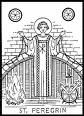
It is interesting to remember how the Royal Touch was believed to heal and bless.  With the spread of Christianity, monarchs were seen as religious figures with magical or curative powers. It was believed that Royal Touch, the touch of the sovereign of England or France, could cure diseases due to the devine right of sovereigns. Members of the royal courts often propagandized that those receiving the Royal Touch were miraculously healed. André du Laurens, the senior physician of Henry IV, publicized findings that at least half of those that received the Royal Touch were cured within a few days. Then we have the story of St peregrinus – the Patron Saint of Cancer. 
Near the end of the thirteenth century a zealous young priest of the order of

Patron Saint of Cancer Patients

Servites fell ill with a painful cancer of the foot. He bore his trial without a murmur and, when it was decided that amputation should be performed, he spent the night preceding the operation in prayer before his crucifix. He then sank into a light slumber from which he awoke completely cured—to the amazement of the doctors who could no longer detect any trace of the disease. The holy man lived to the age of eighty and died in sanctity. He became known as St. Peregrinus, the patron saint of cancer.

In this context – I introduce  two other sources for placebo – Both are from an indigenous source. I encourage you to consider the difference between an uneducated person who accepts their cultural beliefs and background including those in authority and our  current Western style culture where education levels are  a higher standard and where tradition and authority is often scorned or rebelled against. Did these simple beliefs and rituals have a ‘magical’ placebo effect?

The following stories  from the 1800’s were both recorded by medical physiologist Walton Cannon and concern  Australian experiences – the first one being an indigenous Australian account and the second – a Kanaka from the Polynesian Islands. From his diary he states:
“Dr. S. M. Lambert of the Western Pacific Health Service of the Rockefeller Foundation wrote to me on several occasions as he had seen evidence of death from fear. In one case there was a startling recovery. At a mission at Mona Mona in North Queensland, were many native converts, but on the outskirts of the mission was a group of non-converts, including one “Nebo”, a famous witch doctor. The chief helper of the missionary was Rob, a native who had been converted. When Dr. Lambert arrived at the Mission he learned that Rob was in distress and that the missionary wanted him examined. Dr. Lambert made the examination, and found no fever, no complaint of pain, no symptoms or signs of disease. He was impressed, however, by the obvious indications that Rob was seriously ill and extremely weak. From the missionary he learned that Rob had had a bone pointed at him by Nebo and was convinced that, in consequence, he must die. Thereupon, Dr. Lambert and the missionary went for Nebo, threatened him sharply that his supply of food would be shut off if anything happened to Rob and that he and his people would be driven away from the  mission. At once Nebo agreed to go with them to see   Rob. He leaned over Rob’s bed and told the sick man that it was all a mistake, a mere joke…indeed, that he had not pointed a bone at all.
The relief, Dr. Lambert testifies, was almost instantaneous. That evening Rob was back at work, quite happy again and in full possession of his physical strength.
A less fortunate outcome is reported in the next account.

Continue reading “Grace Gawler Writes About Beliefs, Cancer & the Power of Placebo in Survival Part 3”

Grace Gawler Writes About Beliefs, Cancer & the Power of Placebo in Survival Part 3

Can placebo heal? Can placebo provide a short term burst of hope based on belief?  Remember from our first post that from Latin placebo means ‘I shall please’ whereas Nocebo means ‘I shall harm’. Just how powerful are words of power, thoughts and beliefs?
With these definitions in mind, consider the  following stories. They powerfully demonstrate how belief systems can either turn on or turn off the will to live and how inexplicable healing can sometimes occur through belief.  Consider the power of Sovereigns to heal in medieval  times and the power of prayer
It is interesting to remember how the Royal Touch was believed to heal and bless.  With the spread of Christianity, monarchs were seen as religious figures with magical or curative powers. It was believed that Royal Touch, the touch of the sovereign of England or France, could cure diseases due to the devine right of sovereigns. Members of the royal courts often propagandized that those receiving the Royal Touch were miraculously healed. André du Laurens, the senior physician of Henry IV, publicized findings that at least half of those that received the Royal Touch were cured within a few days. Then we have the story of St peregrinus – the Patron Saint of Cancer. 
Near the end of the thirteenth century a zealous young priest of the order of

Patron Saint of Cancer Patients

Servites fell ill with a painful cancer of the foot. He bore his trial without a murmur and, when it was decided that amputation should be performed, he spent the night preceding the operation in prayer before his crucifix. He then sank into a light slumber from which he awoke completely cured—to the amazement of the doctors who could no longer detect any trace of the disease. The holy man lived to the age of eighty and died in sanctity. He became known as St. Peregrinus, the patron saint of cancer.

In this context – I introduce  two other sources for placebo – Both are from an indigenous source. I encourage you to consider the difference between an uneducated person who accepts their cultural beliefs and background including those in authority and our  current Western style culture where education levels are  a higher standard and where tradition and authority is often scorned or rebelled against. Did these simple beliefs and rituals have a ‘magical’ placebo effect?

The following stories  from the 1800’s were both recorded by medical physiologist Walton Cannon and concern  Australian experiences – the first one being an indigenous Australian account and the second – a Kanaka from the Polynesian Islands. From his diary he states:
“Dr. S. M. Lambert of the Western Pacific Health Service of the Rockefeller Foundation wrote to me on several occasions as he had seen evidence of death from fear. In one case there was a startling recovery. At a mission at Mona Mona in North Queensland, were many native converts, but on the outskirts of the mission was a group of non-converts, including one “Nebo”, a famous witch doctor. The chief helper of the missionary was Rob, a native who had been converted. When Dr. Lambert arrived at the Mission he learned that Rob was in distress and that the missionary wanted him examined. Dr. Lambert made the examination, and found no fever, no complaint of pain, no symptoms or signs of disease. He was impressed, however, by the obvious indications that Rob was seriously ill and extremely weak. From the missionary he learned that Rob had had a bone pointed at him by Nebo and was convinced that, in consequence, he must die. Thereupon, Dr. Lambert and the missionary went for Nebo, threatened him sharply that his supply of food would be shut off if anything happened to Rob and that he and his people would be driven away from the  mission. At once Nebo agreed to go with them to see   Rob. He leaned over Rob’s bed and told the sick man that it was all a mistake, a mere joke…indeed, that he had not pointed a bone at all.
The relief, Dr. Lambert testifies, was almost instantaneous. That evening Rob was back at work, quite happy again and in full possession of his physical strength.
A less fortunate outcome is reported in the next account.

Continue reading “Grace Gawler Writes About Beliefs, Cancer & the Power of Placebo in Survival Part 3”

Grace Gawler Writes About Beliefs, Cancer & the Power of Placebo in Survival Part 2

DIAGNOSIS, PROGNOSIS AND BEYOND ( adapted from Women of Silence – The Emotional Healing of Breast Cancer-Grace Gawler pub  1994, 2003. Click here to buy your copy – also available in e-Book.) Only available from the author.

It was noticeable in the early days of conducting support groups, that when people spoke of their lives and their cancers, other patients in the room would begin to nod knowingly as they identified how their own story aligned with those dealing with the same cancer.
We all have an ability to switch off our life force and lose our passion for living. There are many stories from indigenous cultures of people who consciously died because they believed the would. Perhaps such a message triggers a powerful belief that causes the soul to leave.  This ability has also been demonstrated in many indigenous cultures including the Australian aborigine, the Kikuyu of Kenya and the bushmen of the Kalahari. There have been many instances of this phenomenon. These cultures live very much in the here and now, so when imprisoned, they believe it is forever and they simply die. They lose their will to live or will to be because they see no end to their situation. Tribal indigenous Australians are  known for the phenomenon of “bone pointing” where healthy individuals die because their belief system supports the tribes medicine man who has a position of power and authority.

There are parallels between these experiences and the experiences of those diagnosed with a life threatening illness. Often, much depends on how the diagnosis and prognosis are delivered to the patient. At a vulnerable moment, information poorly delivered by a doctor and/or poorly received by the patient can cause the spirit to retreat and withdraw, eventually resulting in death. I have known many patients with six months to live who die almost to the day as if set by some invisible internal clock. When lack of hope and possibility are vocalised by a person of power, the patient is, at that moment, faced with a life and death decision. So powerful can it be, that all else, all survival messages, are filtered out of the patient’s awareness and the process of dying begins. Continue reading “Grace Gawler Writes About Beliefs, Cancer & the Power of Placebo in Survival Part 2”

Grace Gawler Writes About Beliefs, Cancer & the Power of Placebo in Survival Part 2

DIAGNOSIS, PROGNOSIS AND BEYOND ( adapted from Women of Silence – The Emotional Healing of Breast Cancer-Grace Gawler pub  1994, 2003. Click here to buy your copy – also available in e-Book.) Only available from the author.

It was noticeable in the early days of conducting support groups, that when people spoke of their lives and their cancers, other patients in the room would begin to nod knowingly as they identified how their own story aligned with those dealing with the same cancer.
We all have an ability to switch off our life force and lose our passion for living. There are many stories from indigenous cultures of people who consciously died because they believed the would. Perhaps such a message triggers a powerful belief that causes the soul to leave.  This ability has also been demonstrated in many indigenous cultures including the Australian aborigine, the Kikuyu of Kenya and the bushmen of the Kalahari. There have been many instances of this phenomenon. These cultures live very much in the here and now, so when imprisoned, they believe it is forever and they simply die. They lose their will to live or will to be because they see no end to their situation. Tribal indigenous Australians are  known for the phenomenon of “bone pointing” where healthy individuals die because their belief system supports the tribes medicine man who has a position of power and authority.

There are parallels between these experiences and the experiences of those diagnosed with a life threatening illness. Often, much depends on how the diagnosis and prognosis are delivered to the patient. At a vulnerable moment, information poorly delivered by a doctor and/or poorly received by the patient can cause the spirit to retreat and withdraw, eventually resulting in death. I have known many patients with six months to live who die almost to the day as if set by some invisible internal clock. When lack of hope and possibility are vocalised by a person of power, the patient is, at that moment, faced with a life and death decision. So powerful can it be, that all else, all survival messages, are filtered out of the patient’s awareness and the process of dying begins. Continue reading “Grace Gawler Writes About Beliefs, Cancer & the Power of Placebo in Survival Part 2”

Grace Gawler – Grace Gawler Institute: How emotions can affect the healing and recovery process in cancer patients

Part 2. The Importance of Emotions in Healing and RecoveryPlease pass on this blog URL to anyone you know who is dealing with cancer
help can also be found at www.gracegawler.com/institute

It is challenging to find the words to discuss emotional material. Our feelings and emotions are so personal, internal. Emotions – be they positive or negative – up or down, have an influence on the brain and brain chemicals. Those chemicals, neuro-peptides, hormones, endorphins to name a few, can influence the body’s chemistry. Day to day more flippant emotions are natural – they come and they go. Where emotions begin to be significant in terms of our health, is in the areas of chronic stress and trauma especially long term or unrelenting trauma. Feelings and affects associated with traumatic events can alter chemistry in mind and body. Below I relate my own experience around this important issue as an example. When talking of emotions and illness it is important not to lean into self-blame or the “I caused my cancer” trip. This article is adapted from my previously published article in the British Holistic Medical Journal. For more on emotions see Reviews on the menu or purchase  Women of Silence the Emotional Healing of Breast Cancer – book and eBook format. Continue reading “Grace Gawler – Grace Gawler Institute: How emotions can affect the healing and recovery process in cancer patients”

error: Content is protected !!